American Pipe Manual: A Comprehensive Guide
This manual details American pipe systems, covering installation of SoftRock drainage, surface & subsurface systems, and ensuring optimal water flow and longevity.
American pipe systems represent a cornerstone of modern infrastructure, facilitating efficient conveyance of water, stormwater, and wastewater across the United States. These systems encompass a diverse range of materials, including ductile iron, PVC, and HDPE, each selected for specific application requirements. Proper installation, adhering to stringent standards like those set by AWWA, ASTM, and ANSI, is crucial for long-term performance.
Innovative solutions like the SoftRock drainage system exemplify advancements, offering pre-assembled, rapid-deployment options for effective water management. Understanding these systems, their components, and best practices is essential for engineers, contractors, and maintenance personnel alike.
Historical Overview of American Pipe Manufacturing
The evolution of American pipe manufacturing mirrors the nation’s growth, beginning with clay and cast iron in the 19th century to meet burgeoning urban needs. Ductile iron emerged as a stronger alternative, while the 20th century witnessed the rise of PVC and HDPE, driven by cost-effectiveness and corrosion resistance.
Innovations focused on jointing methods – from mechanical to push-on and welded connections – enhancing system reliability. Today, manufacturers prioritize sustainable materials and efficient production, reflecting a commitment to environmental responsibility and infrastructure longevity.
Types of American Pipe Materials
American pipe systems utilize diverse materials tailored to specific applications. Ductile iron offers strength and durability for pressure applications, while Polyvinyl Chloride (PVC) provides a lightweight, corrosion-resistant solution for drainage and irrigation.
High-Density Polyethylene (HDPE) excels in flexibility and chemical resistance, ideal for challenging terrains and industrial uses. Material selection considers factors like soil conditions, pressure requirements, and environmental impact, ensuring optimal performance and longevity.
Ductile Iron Pipe
Ductile iron pipe stands out for its exceptional strength and durability, making it a preferred choice for demanding applications like water distribution and wastewater conveyance. Its resistance to corrosion and high-pressure capabilities ensure a long service life.
Manufacturing processes yield consistent quality, and various jointing methods, including mechanical and push-on joints, facilitate reliable connections. Ductile iron’s robustness minimizes the risk of failures, contributing to system integrity.
Polyvinyl Chloride (PVC) Pipe
Polyvinyl Chloride (PVC) pipe is a widely utilized thermoplastic known for its cost-effectiveness and corrosion resistance, making it suitable for various applications, including irrigation and drainage systems. Its lightweight nature simplifies installation, reducing labor costs and project timelines.
PVC offers good chemical resistance and is available in different schedules to accommodate varying pressure requirements. Common connection methods include solvent welding and mechanical joints, ensuring watertight seals and long-term performance.
High-Density Polyethylene (HDPE) Pipe
High-Density Polyethylene (HDPE) pipe stands out for its exceptional durability, flexibility, and resistance to chemicals, making it ideal for demanding applications like wastewater and industrial piping. Its inherent flexibility allows for trenchless installation methods, minimizing disruption and environmental impact.
HDPE boasts a long service life and can be joined using heat fusion welding, creating a completely leak-proof system. This robust material excels in challenging soil conditions and offers superior performance.
American Pipe Standards and Specifications
Ensuring quality and reliability, American pipe manufacturing adheres to stringent standards set by leading organizations. AWWA (American Water Works Association) standards dictate requirements for water distribution and transmission pipes, focusing on material properties and performance.
ASTM International provides comprehensive testing methods and specifications for various pipe materials, while ANSI (American National Standards Institute) oversees standardization across industries. Compliance with these standards guarantees safety, longevity, and interoperability within American pipe systems.
AWWA Standards
AWWA standards are pivotal for ensuring the safe and efficient conveyance of potable water. These standards cover a broad spectrum, from material specifications – dictating acceptable compositions for pipes – to performance criteria, assessing long-term durability and resistance to corrosion.
AWWA M55, for instance, focuses on ductile iron pipe, while other standards address PVC and HDPE. Adherence guarantees water quality, minimizes leaks, and supports reliable water distribution networks across America.
ASTM Standards
ASTM International provides crucial standards for American pipe, focusing on material properties and testing methodologies. These standards, unlike performance-based AWWA guidelines, detail how materials should be manufactured and tested for quality control.
ASTM D1785 covers PVC pipe, while others address HDPE and ductile iron; Compliance ensures consistent material characteristics, facilitating reliable jointing and long-term performance, ultimately contributing to safe and durable piping systems nationwide.
ANSI Standards
The American National Standards Institute (ANSI) plays a vital role in coordinating and approving American pipe standards developed by organizations like ASTM and AWWA. ANSI accreditation signifies a consensus-based process, ensuring standards are technically sound and widely accepted within the industry.
While not directly creating standards, ANSI’s oversight lends credibility and promotes uniformity. This facilitates interoperability and simplifies compliance for manufacturers, installers, and end-users across diverse applications.
Installation Procedures for American Pipe
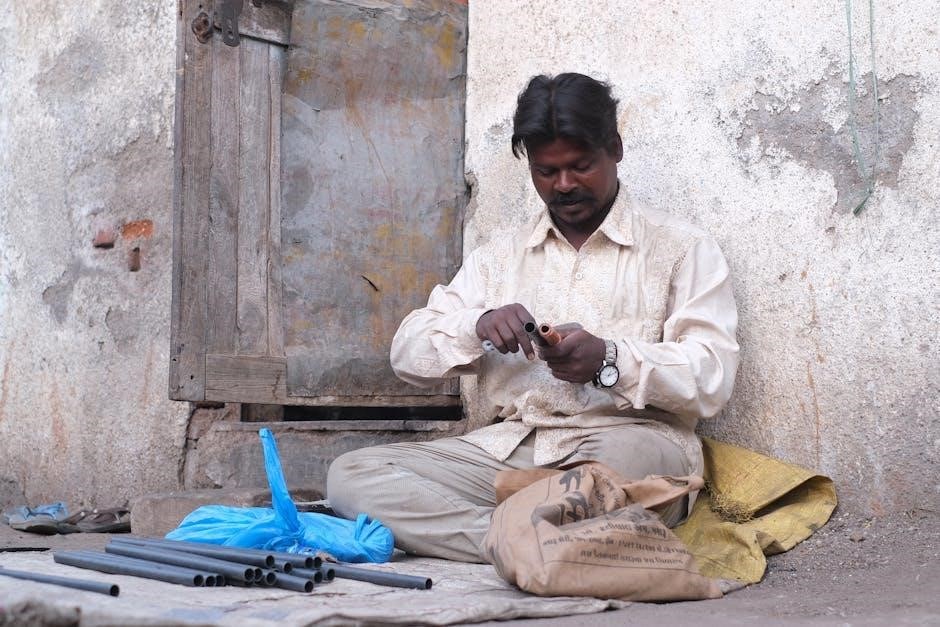
Proper installation is crucial for the longevity and performance of American pipe systems. Initial steps involve meticulous trench preparation and excavation, ensuring appropriate depth and width according to project specifications. Careful attention must be paid to maintaining consistent slope for gravity-fed systems, typically 1-3 degrees, or 3mm per meter.
Accurate pipe laying and alignment are paramount, avoiding stress points and ensuring proper joint engagement. Following manufacturer guidelines is essential for optimal results.
Trench Preparation and Excavation
Thorough trench preparation is the foundation of a successful American pipe installation. Excavation must achieve the required depth and width, considering pipe diameter and necessary backfill material. The trench bottom should be uniformly graded and compacted to provide stable support.
Ensure a consistent slope, ideally 1-3 degrees (3mm per meter), facilitating proper drainage. Remove any rocks, roots, or debris that could damage the pipe or compromise joint integrity. Safety protocols are vital during excavation.
Pipe Laying and Alignment
Precise pipe laying and alignment are crucial for optimal performance of American pipe systems. Carefully lower pipes into the prepared trench, avoiding dropping or impact. Maintain consistent alignment and grade throughout the installation process, referencing established benchmarks.
Ensure proper spacing between pipes to allow for joint connection and accommodate thermal expansion/contraction. Regularly check alignment using surveying equipment to guarantee a smooth, continuous flow path.
Jointing and Connection Methods
American pipe systems utilize various jointing methods to ensure watertight and durable connections. Mechanical joints employ gaskets and bolts for assembly, offering flexibility and ease of installation. Push-on joints, commonly used with ductile iron, create a secure seal with simple insertion.
For steel or HDPE pipes, welded joints provide a permanent, robust connection. Proper preparation and welding techniques are vital for joint integrity. Always adhere to manufacturer specifications and relevant standards during connection procedures;
Mechanical Joint Connections
Mechanical joints are a frequently used method for connecting American pipe, offering flexibility during installation and maintenance. These connections utilize a gasket seated within a bell or hub, compressed by bolts and a follower ring.
Proper gasket selection, based on pipe material and fluid conveyed, is crucial. Tightening bolts to the specified torque ensures a watertight seal. Regular inspection and retightening may be necessary to maintain joint integrity over time, preventing leaks and ensuring system reliability.
Push-on Joint Connections
Push-on joints, also known as rubber gasket joints, provide a quick and reliable method for joining American pipe sections. They feature an integrated rubber gasket within the bell, creating a watertight seal when the pipe is simply pushed into the hub.
Lubrication of the gasket and pipe spigot is essential for easy assembly and proper sealing. These joints are favored for their ease of installation and minimal need for specialized tools, contributing to efficient project completion.
Welded Joint Connections (for Steel/HDPE)
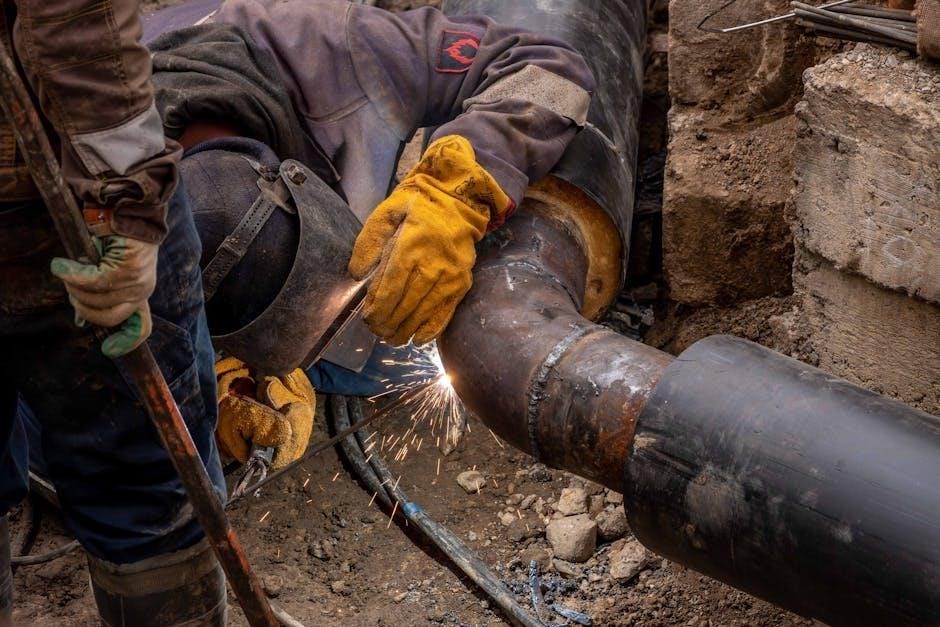
Welded connections are primarily utilized for steel and High-Density Polyethylene (HDPE) American pipe, offering exceptional strength and long-term durability. Steel pipe welding requires skilled technicians and adherence to strict welding codes, ensuring structural integrity.
HDPE welding, often employing techniques like butt fusion, creates a homogenous joint as strong as the pipe itself. Proper surface preparation and controlled cooling are crucial for successful HDPE welds, preventing stress and potential failures.
Drainage Systems Utilizing American Pipe
American pipe plays a vital role in diverse drainage solutions, from residential to large-scale infrastructure projects. Systems include SoftRock drainage, a pre-assembled solution with perforated pipe encased in polystyrene, simplifying installation and eliminating gravel needs.
Surface drainage employs localized inlets like catch basins connected to linear drainage, while subsurface systems manage groundwater. These systems effectively handle stormwater runoff, wastewater, and protect landscapes from moisture damage, ensuring efficient water management.
SoftRock Drainage System Installation
The SoftRock system, a 3-meter length of perforated pipe within polystyrene, streamlines drainage installation. It’s laid directly into a trench, eliminating the need for gravel backfill, and then covered. This pre-assembled design allows for rapid deployment – typically completed by a specialist team within 1-2 days, including preparation.
Ensure a 1-3 degree slope (3mm per meter) towards the discharge point for optimal flow. The five openings per tube ensure efficient drainage without clogging.
Surface Drainage Systems
Effective surface drainage manages excess water from localized sources like gutters, utilizing catch basins for point collection. Larger areas benefit from linear drainage solutions, efficiently channeling water away. These systems are crucial for diverting water from septic systems, roadways, and protecting landscape features like retaining walls.
Installation involves a step-by-step process, designed for efficient water removal. Proper planning and execution are key to preventing water damage and maintaining landscape integrity.
Subsurface Drainage Systems
Subsurface systems address groundwater and soil saturation, employing perforated American pipe surrounded by polystyrene aggregate within a geotextile sock. This configuration prevents clogging, ensuring consistent drainage performance. A crucial aspect is establishing a consistent slope – ideally 3mm per meter – within the trench to facilitate gravity-driven water flow towards the designated discharge point.
These systems are vital for preventing waterlogging and maintaining soil stability, particularly in areas with poor natural drainage.
Specific Applications of American Pipe
American pipe solutions excel in diverse applications, notably stormwater management, efficiently channeling runoff from localized sources like rooftops and extensive areas via linear drainage systems. They are also critical for wastewater collection, safely conveying sewage and industrial discharge. Furthermore, American pipe forms the backbone of reliable water distribution networks, delivering potable water to communities.
Effective drainage protects landscapes, roadways, and structural foundations from water damage.
Stormwater Management
American pipe systems are integral to effective stormwater management, capturing and conveying excess rainfall to prevent flooding and erosion. Utilizing components like dozejreceptory (catch basins) and linear drainage, they efficiently collect water from surfaces. These systems manage runoff from roofs, parking areas, and landscapes, directing it away from vulnerable areas.
Properly designed systems protect infrastructure and minimize environmental impact through controlled water release.
Wastewater Collection
American pipe plays a crucial role in wastewater collection, safely transporting sewage and industrial discharge to treatment facilities. Durable materials like ductile iron, PVC, and HDPE ensure long-term reliability and prevent leaks that could contaminate the environment. These systems handle diverse flows, from residential sources to large-scale industrial outputs.
Effective wastewater collection is vital for public health and environmental protection, requiring robust and well-maintained piping infrastructure.
Water Distribution
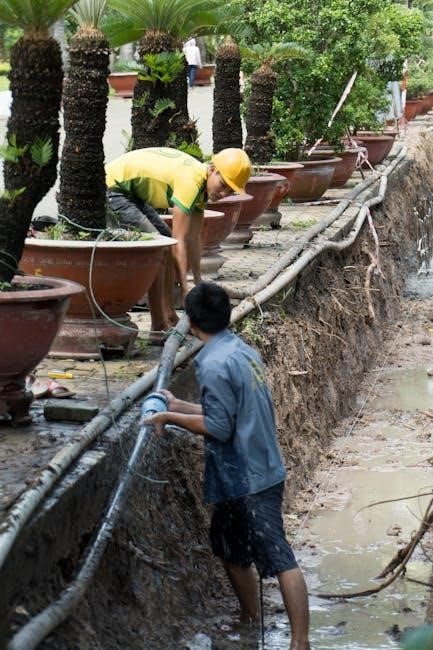
American pipe systems are fundamental to delivering potable water from treatment plants to consumers. Ductile iron, PVC, and HDPE pipes provide safe and efficient transport, minimizing water loss through corrosion or breakage. These networks are designed to maintain consistent pressure and flow rates, meeting diverse demand levels.
Reliable water distribution is essential for public health, fire suppression, and economic activity, demanding high-quality piping materials and installation practices.
Troubleshooting Common Issues
Identifying and resolving issues promptly is crucial for maintaining American pipe system integrity. Common problems include pipe leaks and breaks, often caused by corrosion, ground movement, or material defects. Joint failures, stemming from improper installation or aging seals, also require attention.
Regular inspections can detect early signs of distress, preventing major disruptions. Addressing these issues swiftly minimizes water loss and ensures continued reliable service.
Pipe Leaks and Breaks
Pipe leaks and breaks represent significant concerns within American pipe systems, demanding immediate attention. Causes range from corrosion and material degradation to external loads and ground shifting. Identifying leak sources requires thorough inspection, potentially utilizing acoustic detection methods.
Temporary repairs can involve clamps or sleeves, while permanent solutions necessitate pipe replacement or specialized lining techniques. Prompt action minimizes water loss, prevents further damage, and restores system functionality.
Joint Failures
Joint failures are common issues in American pipe systems, often stemming from improper installation, material incompatibility, or ground movement. Mechanical, push-on, and welded joints each present unique failure modes. Symptoms include visible leakage, soil erosion around the joint, and reduced system pressure.
Repair strategies depend on the failure type, ranging from tightening bolts to complete joint replacement. Careful inspection and adherence to manufacturer specifications are crucial for preventing future occurrences.
Maintenance and Repair of American Pipe Systems
Proactive maintenance is vital for extending the lifespan of American pipe infrastructure. Regular inspection procedures, including visual assessments and pressure testing, help identify potential issues before they escalate. Repair techniques vary based on damage severity, from simple sealant applications to full pipe replacement.
Addressing joint failures promptly and employing appropriate repair methods are crucial for maintaining system integrity and preventing costly disruptions.
Inspection Procedures
Routine inspections are paramount for identifying potential issues within American pipe systems. Visual assessments should focus on identifying cracks, corrosion, or displacement. Pressure testing verifies system integrity and detects leaks. Utilize remote inspection technologies, like cameras, to examine inaccessible areas.
Document all findings meticulously, noting the location and severity of any defects. Regular monitoring allows for timely intervention, preventing major failures and ensuring long-term performance.
Repair Techniques
Effective repair techniques are crucial for maintaining American pipe system functionality. For minor cracks, epoxy coatings or specialized wraps can provide a seal. Larger breaks often necessitate pipe replacement, utilizing appropriate jointing methods – mechanical, push-on, or welding (for compatible materials).
Ensure proper surface preparation before applying any repair material. Following manufacturer guidelines and adhering to relevant standards guarantees a durable and reliable fix, extending the system’s lifespan.
Safety Considerations During Installation and Maintenance
Prioritizing safety is paramount when working with American pipe systems. Trench safety is critical; always slope or shore trench walls to prevent collapse, adhering to OSHA regulations.
Personnel must wear appropriate Personal Protective Equipment (PPE), including hard hats, safety glasses, and high-visibility clothing. Be aware of potential hazards like heavy lifting and confined space entry, implementing proper procedures to mitigate risks and ensure a safe working environment.
Trench Safety
Excavation safety demands strict adherence to regulations to prevent trench collapse. Always slope or shore trench walls exceeding five feet in depth, utilizing appropriate shoring systems like trench boxes or sheeting.
Regularly inspect trenches for signs of instability, such as cracks or water seepage. Never enter an unprotected trench, and ensure adequate egress is available. Competent person oversight is crucial for hazard identification and mitigation, safeguarding personnel during all excavation activities.
Personal Protective Equipment (PPE)
Essential PPE is paramount during American pipe installation and maintenance. This includes hard hats for head protection, safety glasses to shield eyes from debris, and high-visibility vests for enhanced visibility.
Wear sturdy work boots with steel toes, and gloves to protect hands from abrasions and contaminants. Depending on the task, respiratory protection may be necessary. Proper PPE minimizes risks and ensures worker safety throughout the project lifecycle.
American Pipe and Environmental Considerations
American pipe manufacturers increasingly prioritize sustainable practices. Utilizing durable materials like HDPE and ductile iron reduces the frequency of replacements, minimizing lifecycle environmental impact.
Proper installation, like SoftRock drainage systems, prevents soil erosion and protects water quality. Responsible disposal of excavated materials and minimizing site disturbance are crucial. Choosing American-made pipe supports local economies and reduces transportation emissions, furthering environmental stewardship.
Sustainable Materials
Modern American pipe production emphasizes eco-friendly material choices. High-Density Polyethylene (HDPE) offers exceptional durability and recyclability, reducing landfill waste. Ductile iron, while requiring more energy to produce, boasts a long service life and is often recycled at end-of-life.
The use of technologically advanced materials, like the polystyrene surrounding SoftRock drainage pipes, minimizes material usage while maximizing performance and contributing to sustainable infrastructure solutions.
Minimizing Environmental Impact
American pipe installation prioritizes responsible land use and water protection. Trench preparation minimizes surface disturbance, and careful backfilling prevents soil erosion. Utilizing efficient drainage systems, like SoftRock, reduces stormwater runoff and potential pollution.
Properly designed wastewater collection systems prevent groundwater contamination. Quick installation times, like the 1-2 day setup for SoftRock, reduce on-site disruption and overall environmental footprint during project completion.
Case Studies: Successful American Pipe Projects
Numerous projects demonstrate American pipe’s reliability in diverse applications. Successful stormwater management implementations showcase effective runoff control, preventing flooding and erosion. Wastewater collection systems utilizing American pipe consistently meet stringent environmental regulations, protecting water resources;
The rapid deployment of SoftRock drainage systems, often completed within 1-2 days, minimized disruption during critical infrastructure upgrades. These case studies highlight durability, efficiency, and long-term cost savings.
Future Trends in American Pipe Technology
Innovation drives ongoing advancements in American pipe materials and installation techniques. Expect increased integration of smart technologies for real-time monitoring of pipe integrity and flow rates, enabling proactive maintenance and reducing leaks. Sustainable materials and manufacturing processes will gain prominence, minimizing environmental impact.
Further development of pre-fabricated systems, like enhanced SoftRock solutions, will streamline installation and reduce on-site labor. Research into self-healing pipe materials promises extended lifespans and reduced repair costs.
Resources and Further Information
For comprehensive standards and specifications, consult the AWWA Website, a leading authority on water and wastewater systems. Explore detailed information on pipe materials, installation best practices, and industry updates.
Additionally, ASTM International Website provides access to rigorous testing standards and material specifications crucial for ensuring pipe quality and performance. These resources are invaluable for engineers, contractors, and anyone involved in American pipe systems.
AWWA Website
The American Water Works Association (AWWA) website (awwa.org) is a premier resource for professionals in the water industry. It offers extensive documentation on water distribution, treatment, and infrastructure, including detailed guidance on American pipe systems.
Users can access standards, manuals, research reports, and educational materials related to pipe selection, installation, and maintenance. AWWA’s resources are vital for ensuring safe, reliable, and sustainable water infrastructure throughout the United States.
ASTM International Website
ASTM International (astm.org) provides a comprehensive collection of technical standards for materials, products, systems, and services. Regarding American pipe, ASTM develops and publishes standards crucial for ensuring quality, performance, and safety.
These standards cover pipe materials like ductile iron, PVC, and HDPE, detailing specifications for manufacturing, testing, and installation. Accessing ASTM standards is essential for engineers, manufacturers, and installers to comply with industry best practices and regulations.